The Three Vehicle Export Models from China in 2026
How Professional Export Works — and Why Structure Now Determines Success
China remains one of the most important vehicle supply markets globally. Beyond its leadership in electric vehicles, it offers unmatched production scale, rapid model cycles, and increasing availability across ICE, hybrid, and alternative drivetrains.
However, as of January 1, 2026, the rules governing vehicle export from China have materially changed. What was once a loosely interpreted process has become a strictly regulated, documentation-driven export environment.
As a result, successful vehicle export is no longer defined by access alone. It is defined by:
- Selecting the correct export model
- Working with a licensed export operator
- Aligning sourcing decisions with regulatory reality, not assumptions
This article explains the three legitimate export models used by professional exporters in 2026, how they differ, and how experienced operators like Dragon Wagon structure each model to ensure legal, reliable international delivery.
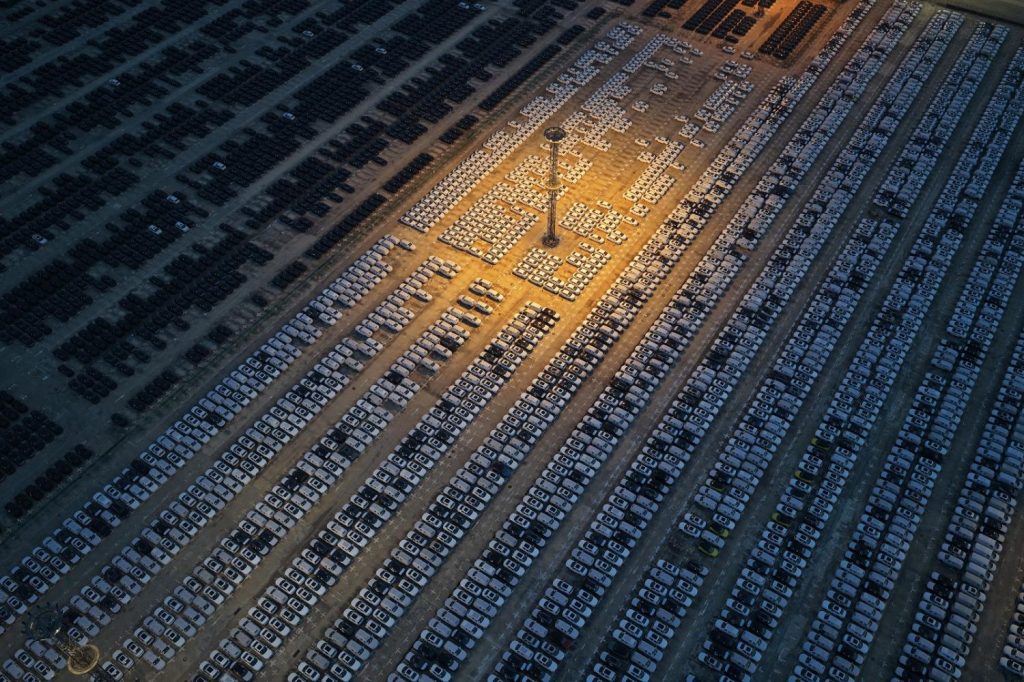
The cleanest and most robust export model remains the export of factory-new vehicles that have never been registered domestically in China.
In this model:
- Vehicles are allocated specifically for export
- No domestic registration occurs at any stage
- Export documentation is issued export-first, not retroactively corrected
- Vehicles clear Chinese customs under factory-new export classification
Executing this model requires:
- Licensed vehicle export status in China
- Direct relationships with manufacturers or top-tier authorized dealer groups
- Production planning and allocation coordination
- Export-compliant documentation from the point of origin
This is not a retail process. Factory-new export is relationship-based and allocation-driven, which is why only a limited number of operators can reliably offer it.
At Dragon Wagon, factory-new export is executed through:
- Established manufacturer and authorized dealer relationships
- Export-first allocation planning
- Full control over documentation, customs clearance, and shipping preparation
This model is typically used for:
- OEM-direct export programs
- Strategic dealer supply
- Fleet and project-based orders
- Markets requiring strict provenance and compliance clarity
From an importer’s perspective, factory-new export offers the lowest regulatory risk and the highest documentation certainty, provided the exporter has genuine allocation access.
China’s secondary vehicle market has evolved into a highly structured supply environment, particularly for low-mileage EVs and recent-model ICE vehicles.
However, export eligibility in this segment is not automatic.
In 2026, pre-owned vehicles may only be exported when:
- The exporting entity holds valid vehicle export licensing
- The vehicle’s registration, ownership, and VIN history are fully traceable
- Export eligibility is confirmed under current customs and regulatory rules
- Documentation aligns across registration, customs, and shipping records
At Dragon Wagon, pre-owned export is handled as a controlled export process, not a marketplace transaction. Each vehicle is individually verified for export eligibility, matched to the appropriate export classification, and cleared through licensed export channels operated by Dragon Wagon.
This model provides:
- Access to a wide range of brands, models, and configurations
- Greater pricing flexibility compared to factory-new units
- Faster availability in many cases
However, it also demands strict process discipline. Many vehicles available domestically in China cannot legally be exported, even if offered for sale.
Mistake #1: Assuming that domestic availability implies export eligibility. Professional exporters confirm export feasibility before vehicle commitment, not after.
The most misunderstood export model in 2026 is the export of pre-registered vehicles.
As of January 1, 2026, newly registered vehicles in China are subject to a mandatory domestic holding period of 180 days before export may be considered.
Key implications:
- Vehicles registered less than 180 days ago are not export-eligible
- Export clearance depends on exact registration dates and classification
- Manufacturer documentation and customs status must align precisely
This means that pre-registered export is no longer a workaround or shortcut. It is a time-bound, compliance-sensitive export option that must be evaluated case by case.
At Dragon Wagon, pre-registered vehicles are exported only when the full 180-day holding period has been satisfied, export eligibility has been formally confirmed, and documentation fully supports the intended export classification.
This model is used selectively when:
- Factory-new allocation is unavailable
- Specific configurations are no longer in production
- Timing aligns with regulatory clearance windows
Mistake #2: Treating pre-registered vehicles as equivalent to factory-new export. In reality, they are fundamentally different from a regulatory and documentation standpoint.
Why Export Model Selection Now Determines Outcome
Each export model carries different implications for timeline reliability, documentation complexity, regulatory exposure, and importer responsibility at destination.
Professional exporters define the export model before sourcing begins, ensuring vehicles selected are export-eligible, documentation is structured correctly from the start, and responsibility boundaries are clearly defined.
This export-first logic is central to how Dragon Wagon operates across all three models.
The Role of Dragon Wagon as Export Operator
Successful vehicle export from China in 2026 is not driven by marketing promises. It is driven by licensed export authority, manufacturer and dealer access, regulatory literacy, documentation control, and single-point accountability.
Dragon Wagon operates as a licensed vehicle export entity, managing export-model selection, vehicle verification, customs clearance, and international shipment preparation.
While import-side clearance, duties, homologation, and registration remain the responsibility of the importer, Dragon Wagon ensures that the export process itself is clean, compliant, and execution-ready.
Final Thoughts
China continues to offer one of the world’s most dynamic vehicle supply environments. But exporting vehicles successfully in 2026 requires structure, timing, and regulatory precision.
Importers who understand export models — and work with operators who execute them properly — reduce risk, protect capital, and build sustainable supply chains.
Considering Vehicle Export from China?
If you are evaluating factory-new allocation, compliant pre-owned export, or post-2026 pre-registered vehicle options, early structuring is essential.
Dragon Wagon supports vehicle export across all three models with licensed execution, verified documentation, and export-first process control from origin to shipment.